Decide which contact you want to create
Start with the step visitors should be able to take after the first contact. Do you want them to experience a product, book an appointment, or discuss a subject? This determines whom you should invite and which interaction makes sense.
A busy booth alone says little about the substance of its conversations. Define what makes participation a useful contact for your team. A visitor might recognise a suitable application, ask a specific question, or request a follow-up demonstration. Staff can then make more focused decisions during the event.
Make the invitation clear from the aisle
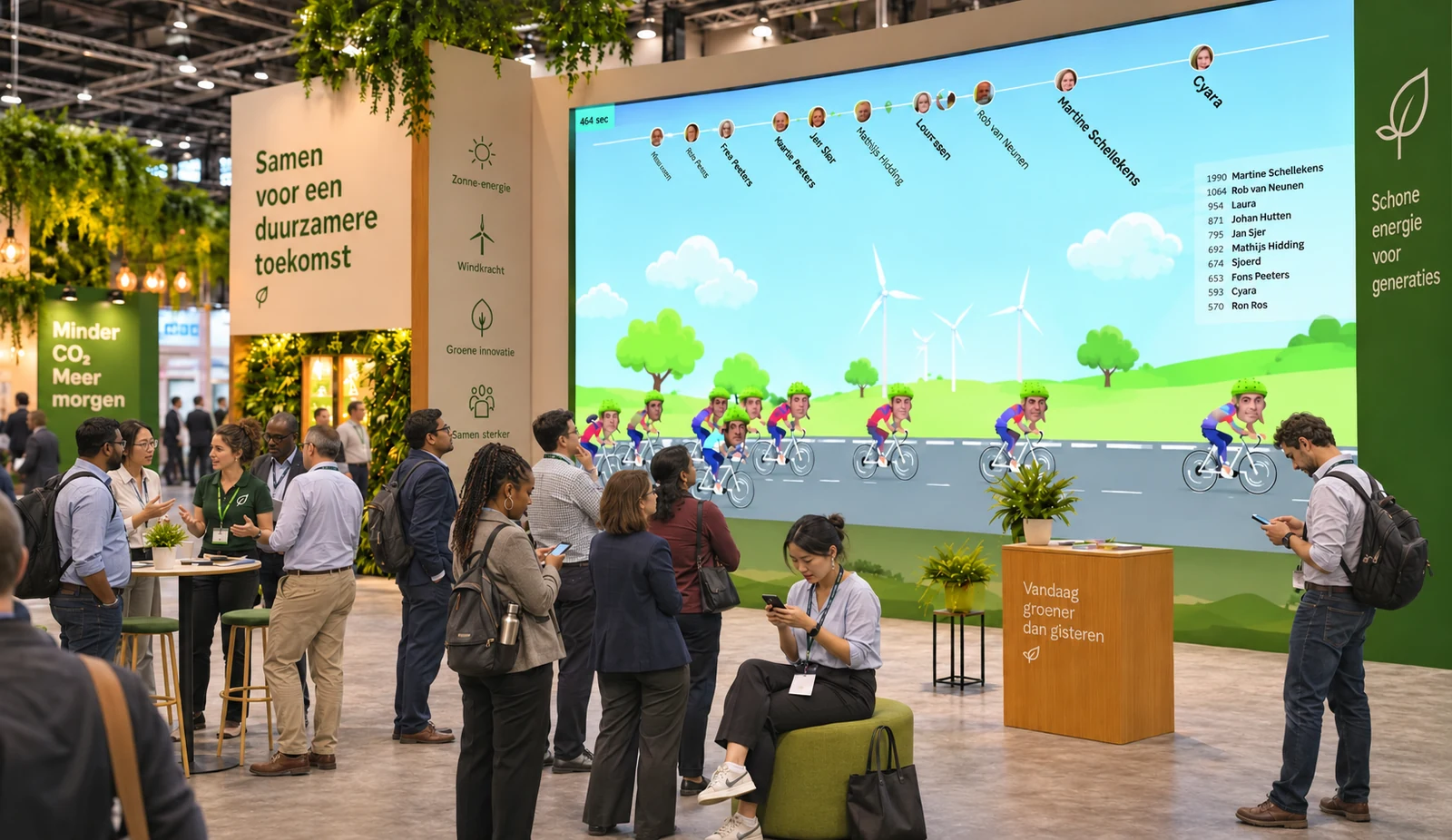
Passers-by usually see your booth while moving. They need to recognise quickly what they can do and where to join. A large screen can demonstrate the action: spinning a prize wheel, racing together, or moving to steer a boat.
Keep the opening message brief. Explain what visitors can do and which result they will see. Test readability from the actual walking route. Phone games also need a place to stop and scan without blocking the aisle. A QR code becomes useful when people understand why they should scan it.
Choose a format that supports your goal
The game format shapes the contact you invite. Look beyond the most attractive image and consider how the action relates to your story and the time visitors have available.
- Prize wheel: a clear giveaway with a brief participation and collection moment.
- Quiz race: product questions and familiar situations as a starting point for a substantive conversation.
- Roll & Race: shared play on phones and the big screen, with a collective reaction as an opener.
- Motion game: a visible physical challenge that spectators can follow.
- Visitor wall: contributions that remain visible during the event and provide topics to discuss.
Rehearse the handover from playing to talking
A colleague who only explains where to start uses part of the opportunity. Agree who invites, supports participation, and follows up afterwards. One person may combine these roles at a small booth, provided the journey is clear.
Connect the follow-up question to what the visitor just did. Which quiz question stood out? Which application do they recognise? What interests them about the product in the game world? Then offer a specific next step: a specialist conversation, a brief demonstration, or an appointment for later.
Leave enough room for the activation
A game creates several groups: players, spectators, and visitors already talking to staff. Plan where each group stands and whether they obstruct one another. Motion controls also require clear space around the player.
Test on the actual booth computer with the expected connection and display setup. Phone games and camera activations have different requirements. Offer another contact route for visitors who do not want to play: your team or a demonstration should still make the product story available.
Measure what follows the attention
Choose a simple way to record participation and conversations before the event. Staff could count participants, the substantive conversations that follow, and specific follow-up appointments. Define those terms consistently across the team.
Afterwards, consider which invitation and game format suited the contacts you wanted. Combine any game data with staff observations. You can then identify improvements to waiting time, explanation, or the conversational handover. This provides a more useful starting point for the next event than screen views alone.
Frequently asked questions
Does every game need a prize?
A prize can support participation, but it is not a fixed part of every activator. A recognisable challenge, shared moment, or relevant product experience can also provide the starting point.
Which game attracts the most visitors?
There is no honest universal answer without knowing the audience, booth, and goal. Choose and test the format for the interaction you want, then record what happens during the show.
Can an activator work in a small booth?
Available space determines the suitable format and setup. A camera challenge needs different movement space from a phone game or prize wheel. Include the floor plan in the decision.