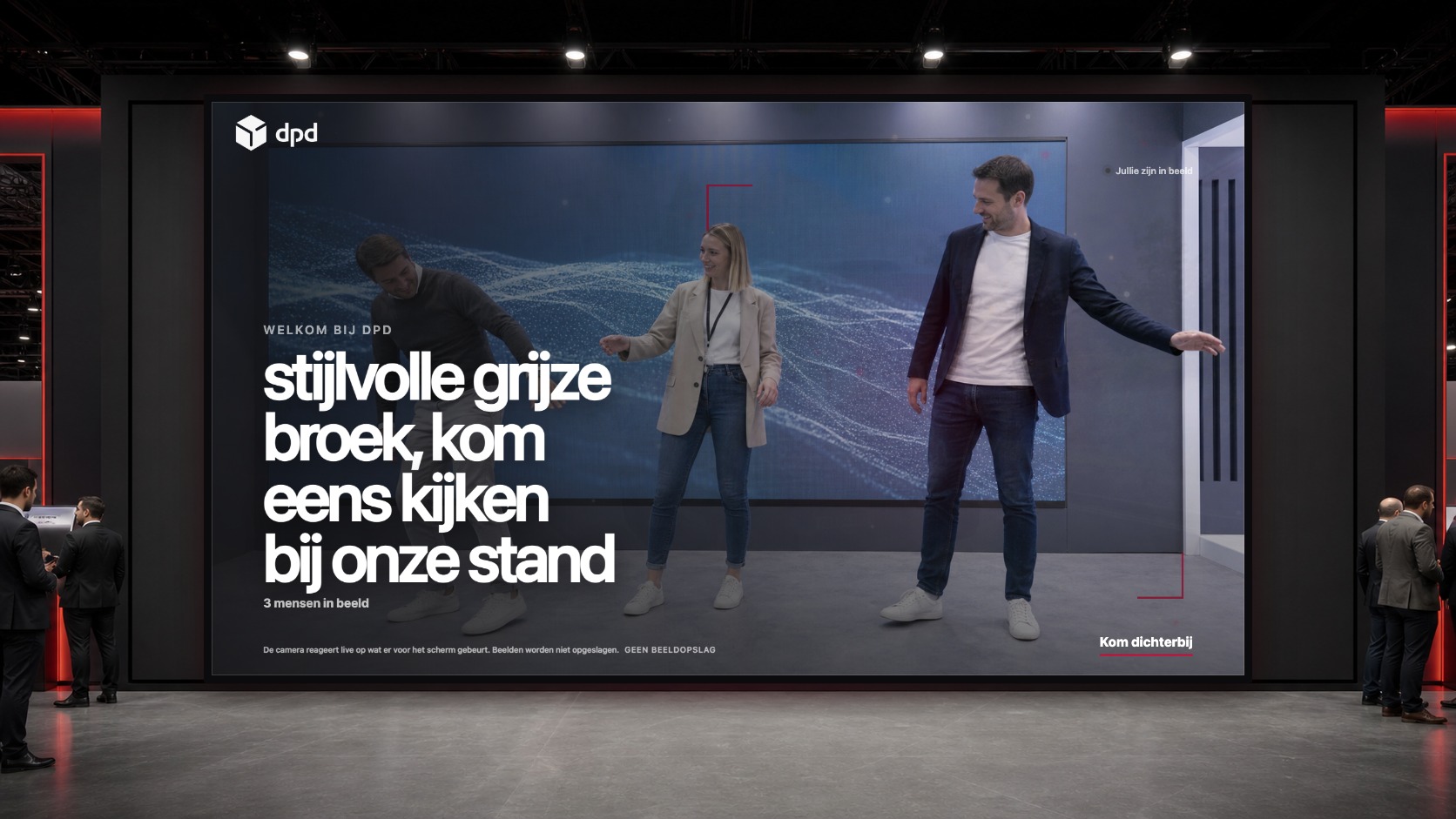
An opener is different from a complete pitch
At a trade show, someone may walk past before you can explain your whole offer. A short on-screen invitation makes it clear that participation or contact is welcome. The message does not need to say everything; it should suit the moment and give the visitor an understandable next step.
Decide whether you are inviting someone to try a game, watch a demonstration, or ask the team a question. If the display promises something the booth cannot deliver immediately, the opener loses its purpose.
Agree the tone and content beforehand
The opener should fit your brand. A playful invitation works differently from a quiet, businesslike message. Discuss the tone, topics, and boundaries before using the activation at an event.
Write messages that make sense without prior knowledge. Be specific about what visitors can do and where. Avoid assigning traits or needs to a passer-by that you do not know. A useful opener leaves room for a response rather than making a judgement.
Staff turn the opening into a conversation
Position the activation where a colleague can notice a response. A smile, a brief pause, or a question creates a moment to make contact. The screen does not need to take over the entire sales journey.
Rehearse the question that follows the invitation. Connect it to a product, topic, or demonstration at the booth. During the event, keep track of which invitations lead to useful conversations; a simple staff tally can help.
Test visibility and timing in the real setup
Screen position, camera angle, lighting, and the walking route matter for a camera activation. Messages must be readable while people pass. A poorly aimed camera may see a different area from the one where you want to invite visitors.
- Choose one clear next step for the invitation.
- Test message length at the distance from which visitors see the screen.
- Agree who responds when someone stops.
- Discuss the image processing and data needed for this specific activation.
Frequently asked questions
How is this different from a motion game?
The booth host focuses on the first invitation through short screen messages. A motion game asks visitors to play a challenge where movement produces a visible game result.
Does everyone need to take out a phone?
The invitation appears on the booth display. Whether the next step needs a phone depends on the game or participation flow connected to it.
Does it replace a staff member?
The activation supports the initial contact. Your team remains responsible for questions, product explanations, and the continuing conversation. Plan who will respond to visitors.